
Habib Khan, PhD - Director of Education for South and Central Asia, OLPC
Sreeram Dhurjaty, PhD - Medical electronics consultant
Michail Bletsas - Director of Network Computing, MIT Media Lab / OLPC
Arnan (Roger) Sipitakiat, PhD - former MIT Media Lab grad / OLPC Thailand
Santi Tisayakorn - DSIL Provost
Dr.Thaweesak Koanantakool - VP of NSTDA / OLPC Thailand
Dr. Stephen J. Atwood, MD - Unicef EAPRO
Phonchan (Newey) Kraiwatnutsorn - Director of Youth Venture
Sinee Chakthranont - Ashoka Thailand
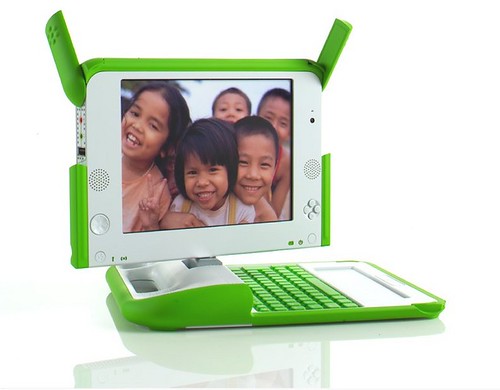
For those not really familiar with the XO laptop let me discuss some of its unique capabilities:
 DURABILITY: Certified to operate in temperatures up to 45 degrees celsius; withstands 125G of shock due to lack of a hard drive; dual-mode screen (reflective B/W mode) that can be read in direct sunlight
MOBILITY: IEEE 802.11s. For those not familiar with geek-speak, it's a standard for MESH networks, where only one computer needs to maintain an internet connection. Thus it creates the potential for internet access and connectivity where technical infrastructure doesn't exist. According to early tests, the WiFi antennae range reached 1000 meters.

Check out this interactive flash demo
EFFICIENCY: Consumes about 2 watts, 1/10th the power of standard laptops. Low-power consumption allows the XO to be recharged through human powered alternatives.
More technical details can be found here
However, the most interesting feature of the XO that allowed us to explore non-traditional application extensions is the dual-mode microphone input that also serves as a SENSOR INPUT. The embedded Analog-to-Digital converter facilitates the integration of various biological sensors:
- Electrocardiogram (ECG) = Heart rhythm analysis
- Arrythmia, Heart Failure
- Electromyogram (EMG) = Muscle condition
- Nerve compression or injury (Carpal Tunnel Syndrome)
- Spirometer = Breathing measurements
- Asthma (Occupational), Chronic Obstructive Pulmonary Disease
- Pulse Oximeter = Oxygenation of blood
- Bioelectrical Impedance = Body fat analysis
We’ve introduced a very powerful computing platform that can perform diagnostics on the human body, but how specifically can we leverage this technology to help others?
Can we bring basic primary care to others in rural villages?
Can we help elders manage chronic illness?
Are our bodies endangered by our surroundings?
Can we educate others about basic sanitation, dietary needs, etc.?
We could certainly develop a hardware peripheral for remote patient monitoring to address issue #2, but this form of patient management has been around for some time and we didn't want the focus of our effort to stray from the educational goals of the organization: the enrichment of the children.
OLPC Educational Proposition
It is critically important to adequately educate all the children of the emerging world. Simply doing more of the same is no longer enough, if it ever was. If their citizens are to benefit, as they should from the spread of the technology-based, global information economy, these nations must rethink the old top-down classroom paradigm, and replace it with a dynamic learning model that leverages the children themselves, turning them into “teachers” as well as “learners.” The tool with which to unlock their enormous potential is the XO. Put this ultra-low-cost, powerful, rugged and versatile laptop in their hands, and the kids will do the rest.
OLPC Golden State's mission is driven by this proposition. We truly believe that one of the most effective ways to improve the lives of youth is to empower them to realize their own ability to make positive social change.
- Engage the children to think about health concerns in their community
- Educate the students about basic health diagnostics and primary care/preventive medicine
- Develop HW peripherals and SW applications geared towards health related issues they want to address
- Support deployment and execution of pilot projects
Since there is much complexity behind these health issues and fundamentals, we realize a great deal of mentorship from technical and medical disciplines is needed to produce an effective project. Yet this is what makes our effort much more than just another technical effort. Here is just one example of how we can make a social impact...
Sample Case: Air Pollution in Bangkok
Situation: Over the past 5 years, the air pollution in BKK has become better, but it continues to plague those in the most urban areas. Air pollutants can worsen asthma and allergies and induce asthma attacks even in healthy people.
Main Barrier Addressed: Insufficient evidence that air conditions are better for all citizens. Despite an overall better Air Pollution Index record are certain segments of the population still at risk?
Experiment: Use a spirometer to gather demographics.
Results:
Create awareness of pollution levels
Educate urban dwellers how to protect themselves (asthma treatment/prevention)
Early detection of asthma (occupational asthma)
Education of asthma/allergy management
MAKE THE CASE! Tell us how you could see diagnostics improving society!
